
As I sit at the kitchen table writing this, a movement just outside catches my eye. First three, then another three wax eyes have arrived on an Echium at the edge of the patio. I’d toyed with cutting the echium back a bit, it’s blaze of blue now well over, but I’m so glad now that I didn’t. Layden with seeds, it will be the main meal for these guys for several weeks yet. The echium is just the common vulgaris plant and I can’t claim to have planned this winter sustenance – it arrived unannounced one spring several years ago, but we’ll save talking the joys of self-seeders for another day.
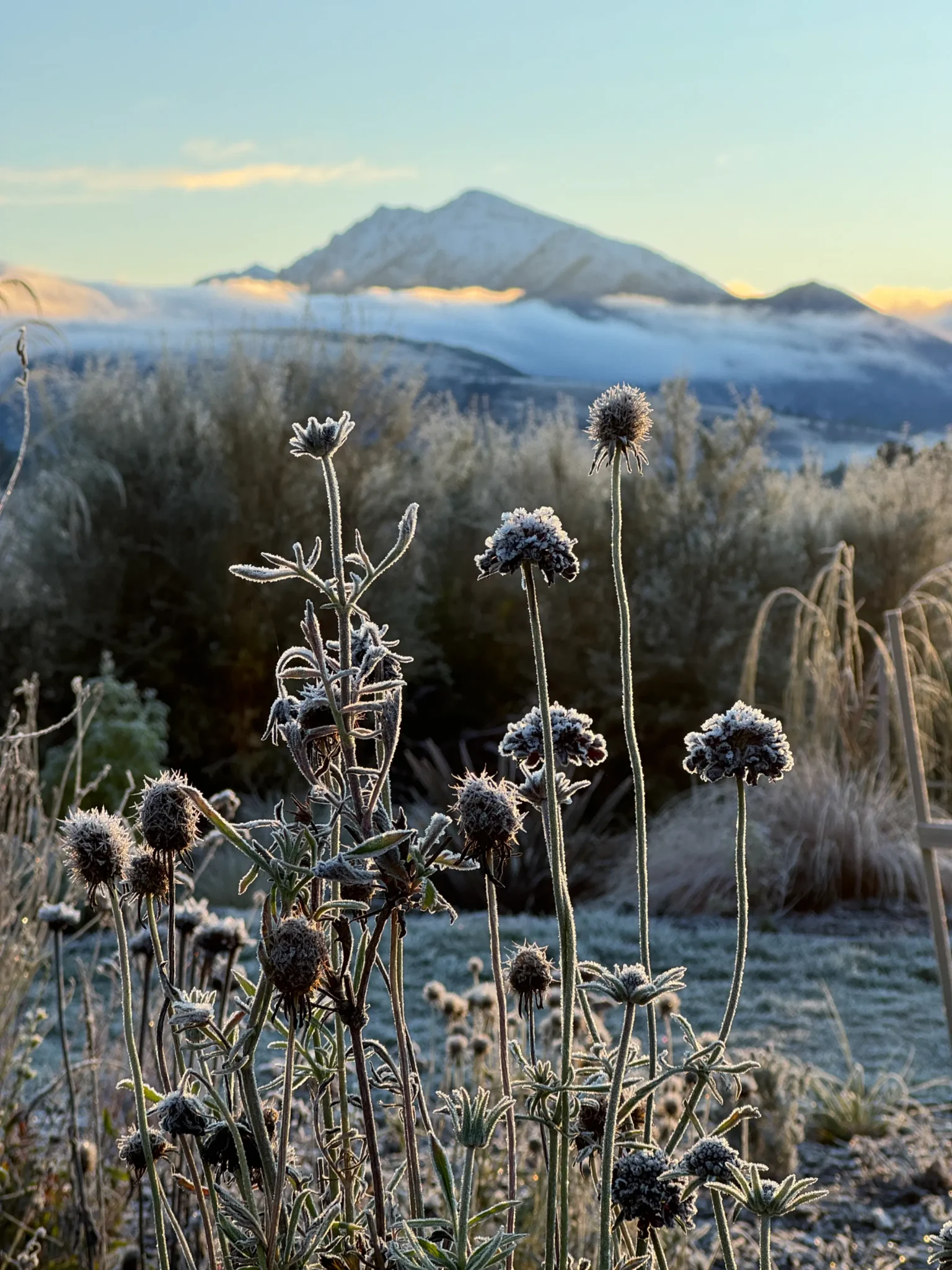
Back to the vista outside. It’s almost June, we’ve had our first debilitating hard frost, and the garden is remarkably leaner. Yet the grasses stand tall – the Miscanthus showing off its majestic seedheads which have only recently reached their potential glory – and the odd penstemon and scabiosa still hold flowers that catch the light like rare gems. It’s as if the lesser the volume, the more precious the contents.
The concept of the big autumn clean-up has been challenged for a while now, gaining traction from prominent planstman and designer Piet Oudorf championing the “The Fifth Season’.
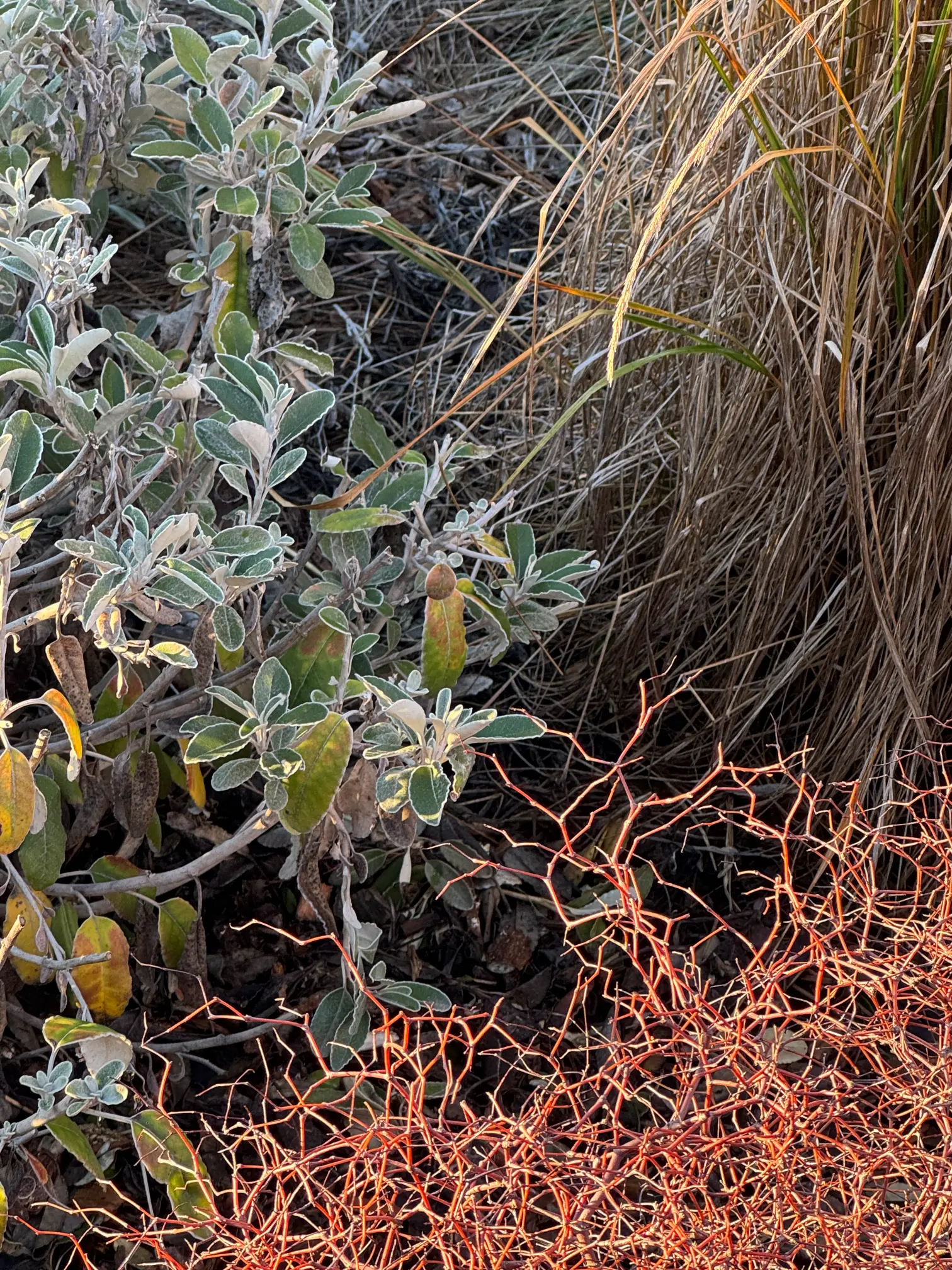
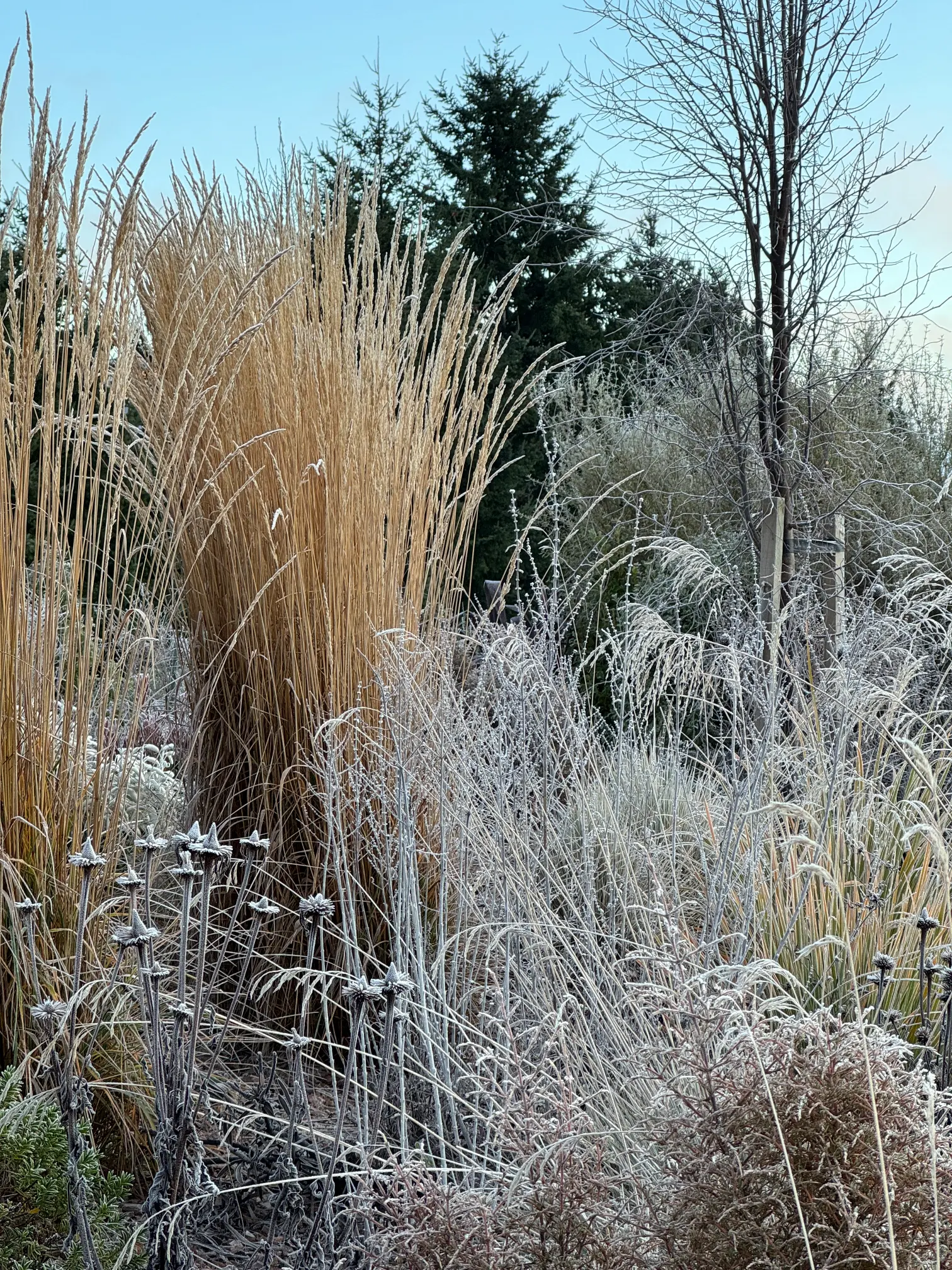
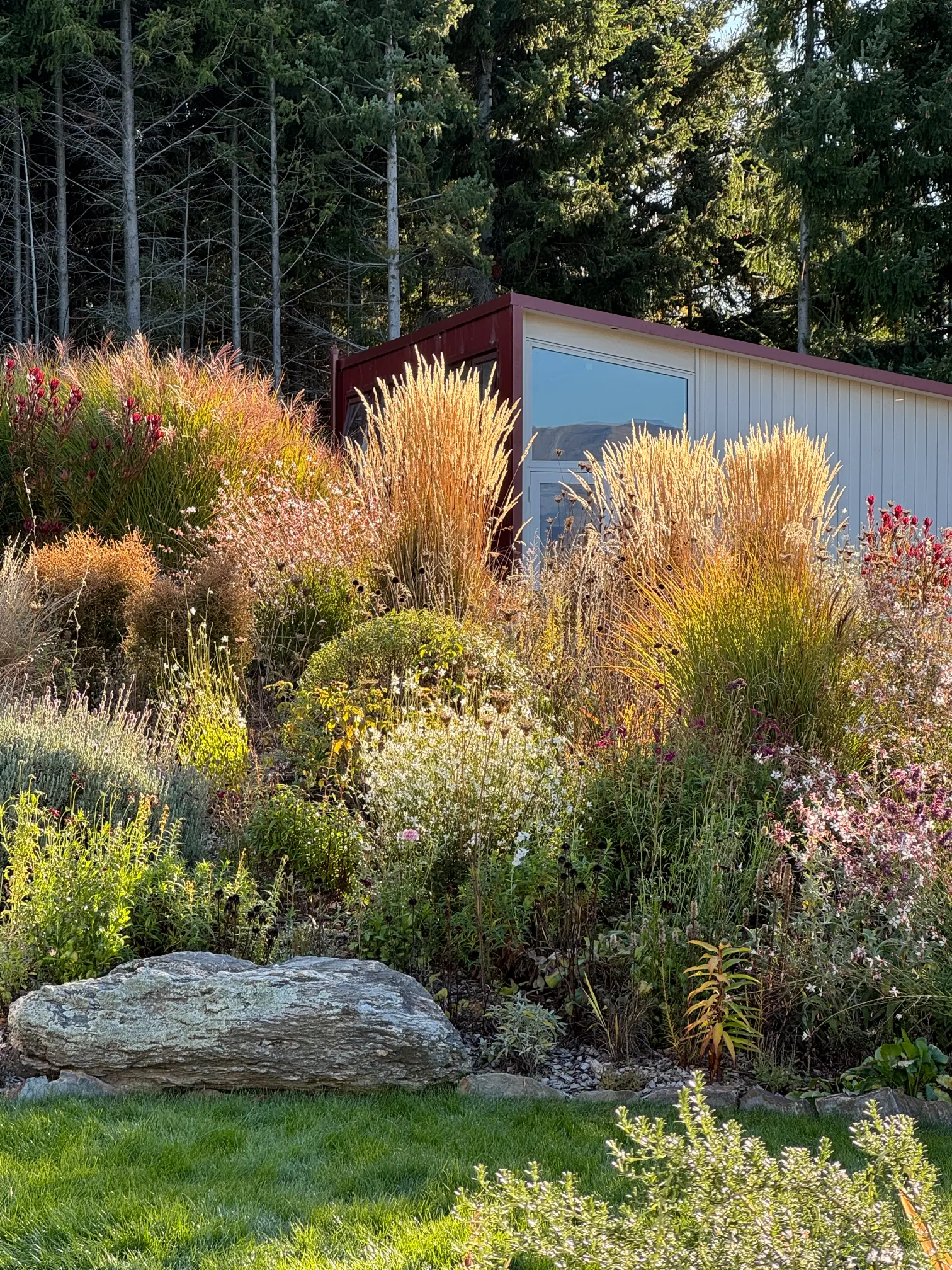
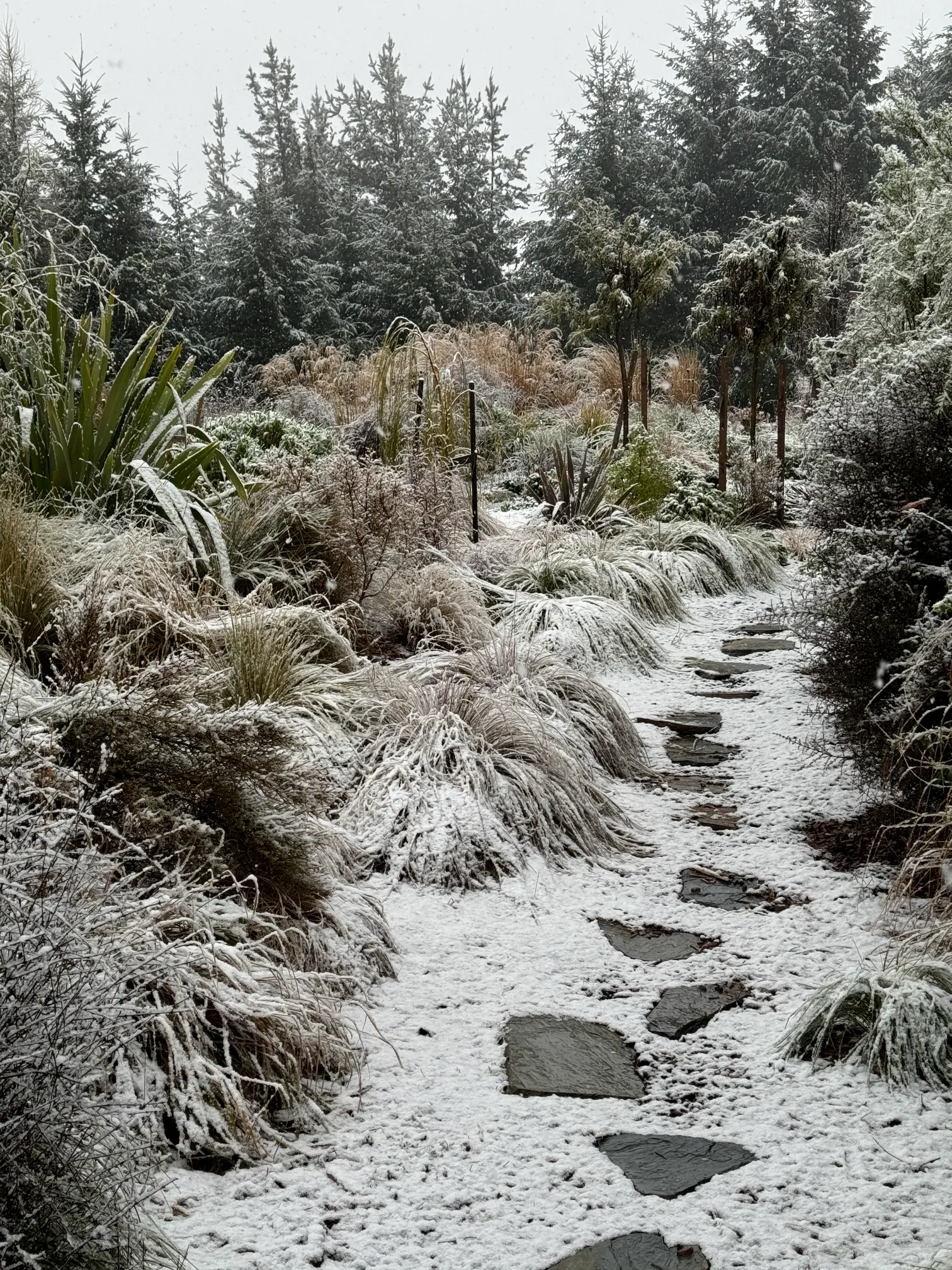
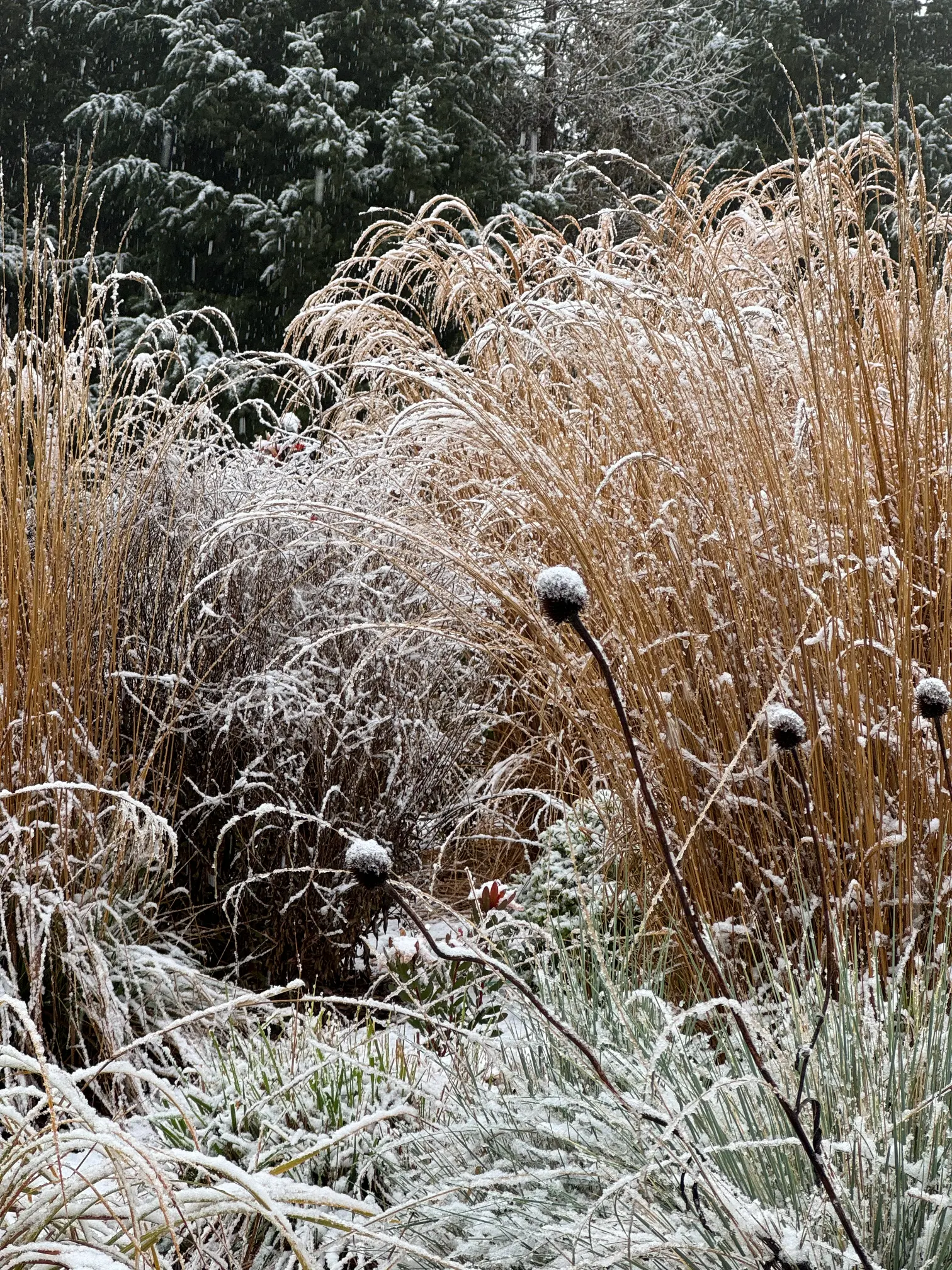
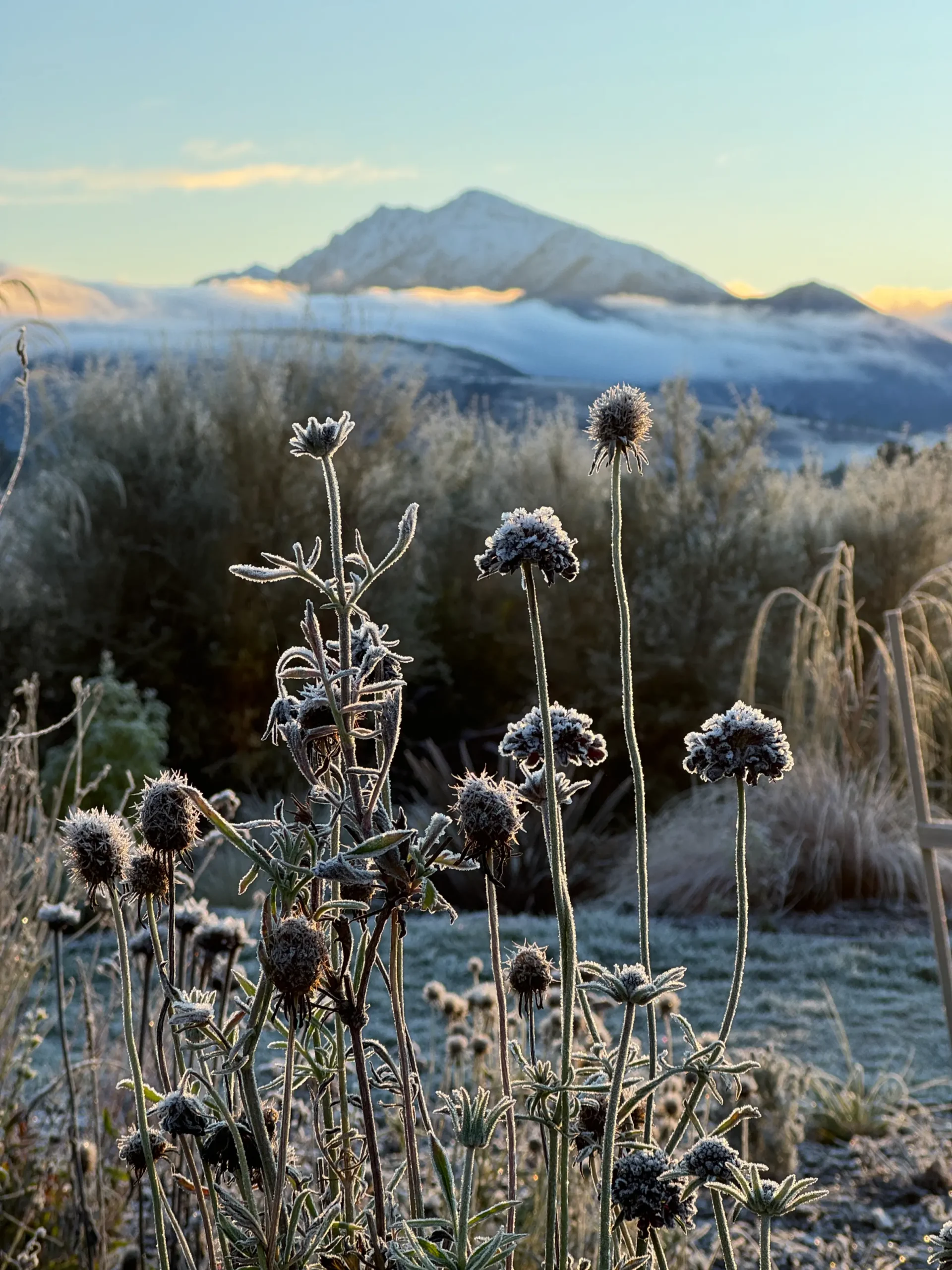
While in the past autumn has been the time to cut back all the summer growth and “put the garden to bed” for the winter, now we’re celebrating the garden in winter’s softer light. Contemporary botanical stewardship argues by doing away with the clean-up not only can we enjoy a new seasonal offering, but nature will be better off too.
Winter’s structural forms have inherent beauty, but there’s another reason it earns its keep. Fallen leaves are drawn down into the soil by worms and underground creatures, enriching the soil as the material breaks down to hummus. What remains on the soil’s surface forms a layer of compost, locking in moisture that the brittle winter wind is only too happy to strip away. Foliage that remains on the plant, even if it’s browned and withered, gives the stems a layer of frost protection, and swaddles new buds and shoots that emerged before the cold set in.
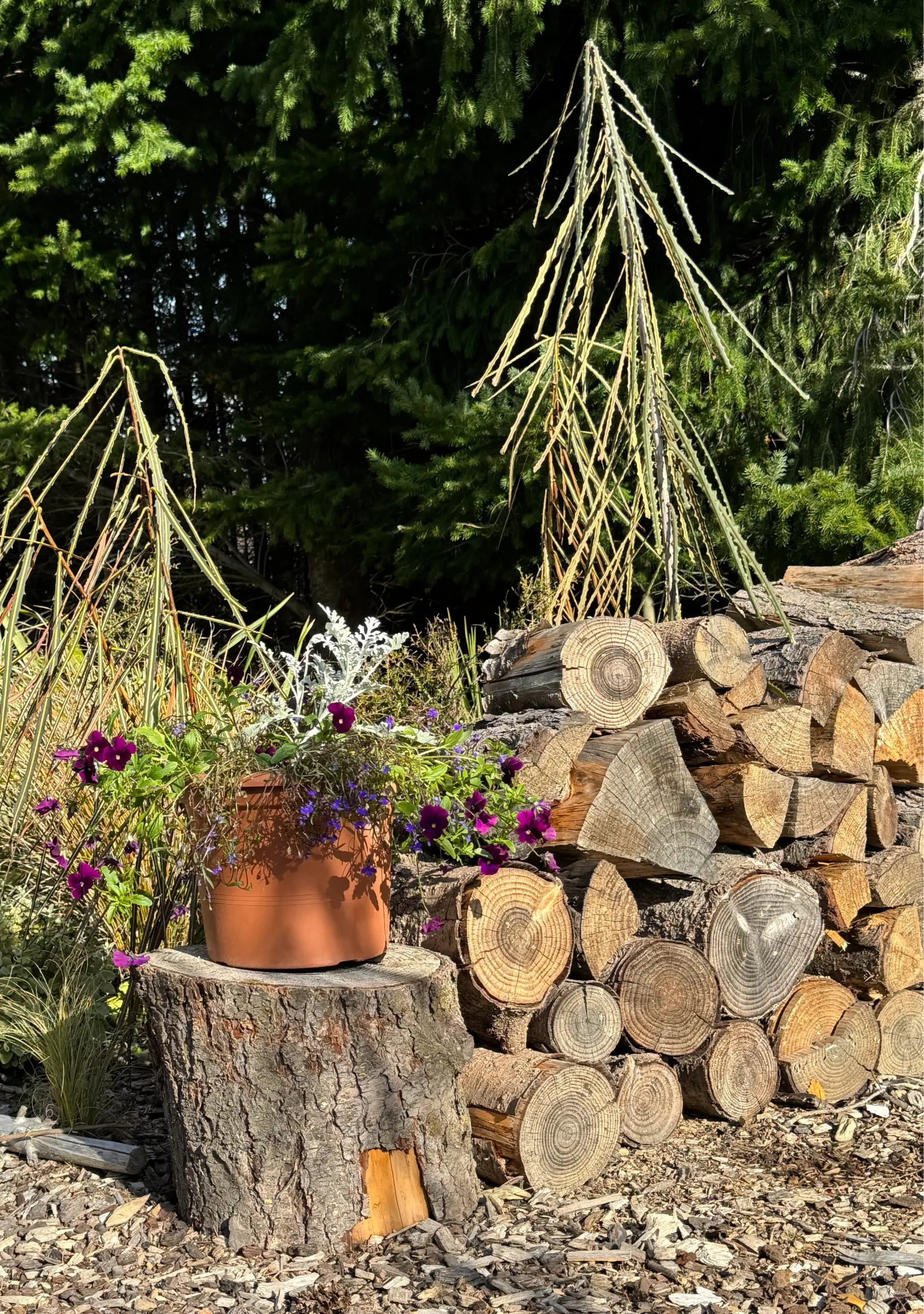
Housing in another reason to keep the garden intact. A lot of the wildlife that called your garden home for the summer wants to stay, and hollow stems and piles of leaves are a warm home for the winter. Many will have laid eggs and the larvae will stay hidden from hungry birds. The more lady bugs there are emerging in spring, the less aphids there will eating succulent spring growth. Piles of sticks, logs and pruned branches are also good cover, and can be picked up in spring before new growth erupts. The late British garden designer Nigel Dunnet had the most beautifully crafted log piles in his own garden, and I’ve stolen his idea and installed my own. Hidden under lush growth for the summer, they take on a stunning sculptural form in winter, and house a huge number of garden creatures.
Form is a key element of the winter garden. Without the eye candy of floral treats, the garden’s structure is the focus. Shrubs like Hebe that have been clipped back after summer flowering have a wonderful spherical shape, and their evergreen winter blanket contrasts beautifully with the coils of wiry Gaura that tangle between mounds. Likewise, the silver domes of wooly Balotta and tough Teucrium shine between mats of rusty carex. In summer the variations of green were swallowed, but laid bare each version of the hue is noticeable. At the back of the border, towering in their winter glory, the Miscanthus and Calamagrostis grasses glow like back-lit orbs in the pale winter sun. Green and non-descript through the summer, they mature to a tawny gold, their huge russet red feather heads iridescent at sunset. In the middle of winter – especially after days of grey, when the sun cracks its pitch-perfect gold, it’s hard to think of the garden ever looking more beautiful.
Back to the feast of the seedheads. My garden’s smorgasbord, with Echinacea, Rudbekia and Sanguisorba seeds a small selection of the menu. The Cardoon too, is a favourite. At almost 3m, its statuesque form makes it easily the most commented on plant in my garden. Stripped of its summer leaves and purple crown, it holds its head high on a hollow rod all winter and is buffet host for as long as it has seeds. Unlike the Cardoon which gives sure footing, the thin wirey seed heads of the Verbena Bonariansis wave like trapezes. Only the confident finches seem game for that agility test.
Which brings me to my final word about the winter garden – time. Winter, as head gardener at Gravetye Manor Tom Coward says, is the only season the gardener can keep up with nature. It’s a time when we can enjoy being in the garden without seeing the plant that needs to be staked or walking guiltily past withering seedlings still waiting to be planted. With the secateurs and spade laying idle, it’s a time to really observe and take in all that nature has to offer.